Showing posts with label zero waste. Show all posts

Tuesday, January 17, 2017

Quest for Zero: Wagner Free Institute

Philadelphia's Wagner Free Institute of Science had it's “greenest” year yet, and the no-landfill goal was a huge part of that.

Don Azuma reports that in 2015 WFIS recycled 77% "of the waste stream that normally would have gone to landfills."  They raised that to 88% in 2016.  That's a terrific result on its own, and it dwarfs the 46% rate of a six-month baseline established in 2007. 
  
Don reports the 88% break out here:  
                1,051 lbs Trash
                7,665 lbs Recycled/Reused 
                                5,743 lbs Paper
                                641 lbs Combined (glass, aluminum, plastic)
                                330 lbs Cardboard
                                275 lbs Compost
                                And 26 different classes of materials that did not go to landfills, 
                                        such as auto tires, office equipment and expired medications.

All the staff at The Wagner pitch in with the zero waste program - how else
would these great examples come about?
The @wagnerfreeinstitute doesn't just manage its own waste production, but also the errant refuse from the neighborhood. The total diversion rate of 19.6 tons of materials since June 2007 includes 3,209 estimated pounds of neighborhood refuse diverted. 

Azuma says "We are a clean little island in the neighborhood," and he reports that some of the neighbors have even taken time to express their appreciation. Now that's how museums contribute to community - by example, by connection, by thinking outside their own spaces. Bravo Wagner! 


Friday, December 2, 2016

Green Gift Shop Ideas: III

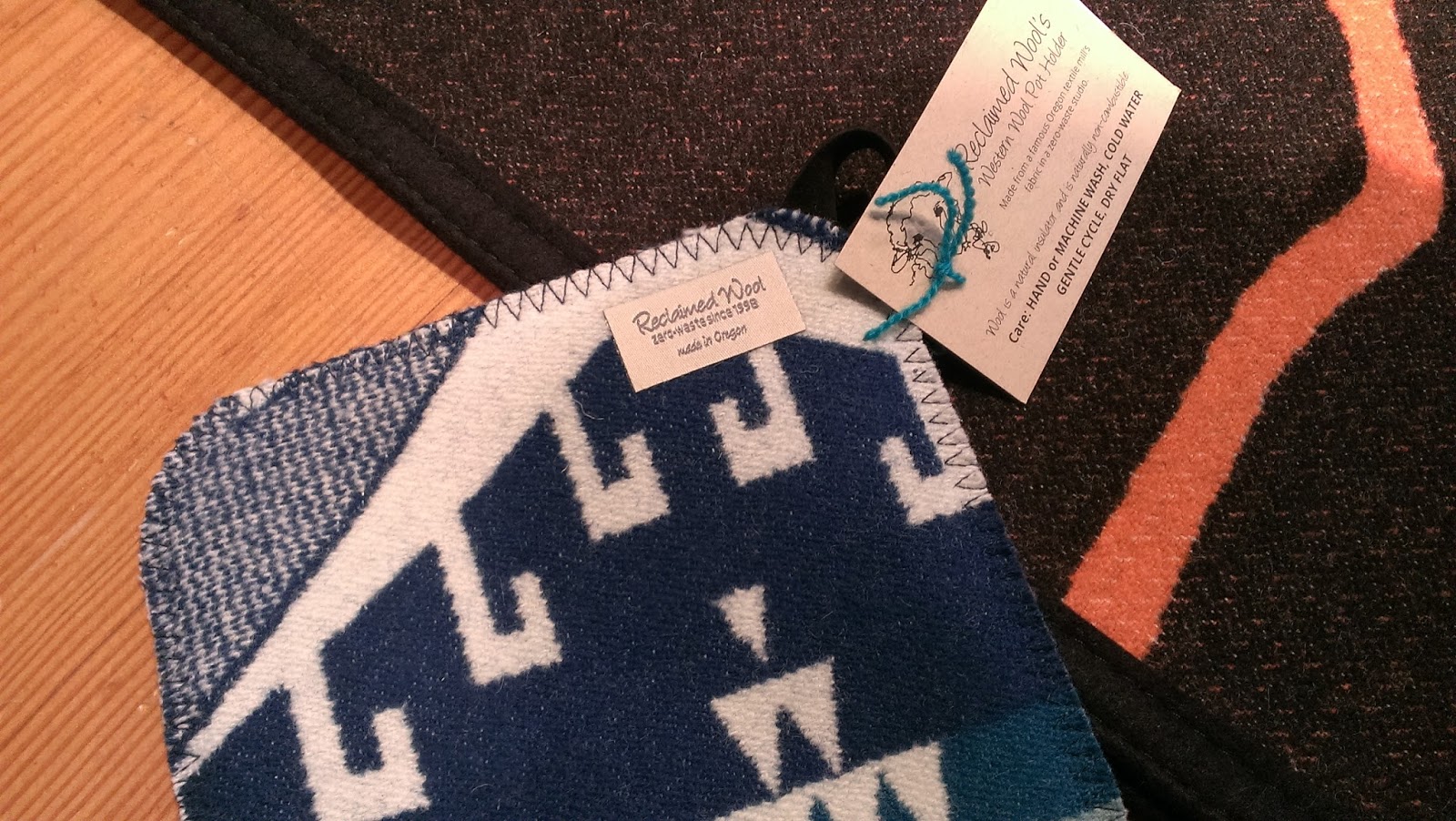
Chihuly Garden & Glass, Seattle: This potholder design supports indigenous art materials referenced in the exhibit.


Chihuly shop potholder: A zero-waste source for locally-made items.

Chihuly Garden & Glass Seattle: Awesomely good fair trade chocolate.

Local adult beverages at Seattle Space Needle

And even more.

Tuesday, October 25, 2016

Green Conference Setting: Cardboard Exhibit Halls

I recently attended two conferences with significant exhibit hall innovations in display materials. It's a very attractive sustainability approach I encourage all trade show hosts to mandate. 
Forestry Stewardship Council: FSC-certified materials IUCN2016
GreenBuild 2016 in Los Angeles, the conference for the United States Green Building Council had a smattering of cardboard exhibit stations. The vendors reported that the material was so light to ship,
easy to pack, and durable that they were taken by surprise AND sold on using it for future events.

The entire exhibit hall was cardboard at the 2016 World Conservation Congress in Honolulu, held by the International Union for the Conservation of Nature. The forms could be made into rooms for presentations, and walls for informational displays. The seating was very comfortable and durable - speakers could even stand on platforms. It was all recyclable after the event, but many planned to reuse theirs.                                                                                               Just think of the carbon saved in shipping lighter goods, the materials saved through recycled sourcing and recycling, the reduced toxins in those materials, and the powerful message it sends about thoughtfulness instead of consumption and flash.                                                                                                                                                      
 

Monday, August 22, 2016

Join a Green Team for Green Leaders

In summer 2017 Sustainable Museums is piloting the first of two Super Green Teams. These are study communities, and the first is for campus-based informal learning institutions: zoos, aquariums, gardens, any campus-based site or open air history museums and farms. The second is for smaller history museums and historic sites. I can also custom design localized learning groups for cities or regional groups interested in cooperative learning and collaborative ideas.

The purpose is to create a learning-group of institutions with shared interests and related concerns, then provide the structure of regular communication and support to advance institutional sustainability goals.

The field is changing; informal learning institutions are expected to set an example in environmental impact, yet it's impossible to keep up with current best practice and anticipate changes to the field. 

That's my job. As your team leader and coach I can bring you the information from your field and related ones, and share the information and sources you're looking for. As a national consultant my time spent visiting sites and speaking to funders, practitioners, and leaders in the field, can be turned to your advantage.  

And your peers - the ones who may have finished similar projects, or have similar questions - they are your learning team. It can be tough to fit new learning and new practice into an already-busy schedule, even when it makes a big difference. There are marvelous opportunities for strengthening our missions while caring for the environment - and it's easier to do if you're working with and learning from others as you go.

Are you ready to advance your current green work? Would you appreciate a team of your peers to think with and to source examples? Join a peer group with ideas, experience, and energy to inspire you. Whether you’re a green team leader, sustainability manager, or operations guru, if you are the one to make a difference at your institution, then you’re the one to join us. 


Twelve organizations can be part of the team 

Benefits:
  • Facilitated discussions to advance green practice
  • From-the-field reports and customized content for group calls 
  • Shared learning among group members
  • Links to valuable resources - contributed and collected: articles and blog posts, product examples, case studies, sample forms, templates, online databases, supporting your needs
  •  A copy of The Green NonProfit: The First 52 Weeks of Your Journey, and The Green Museum 2nd Edition
Join the Team: Ensure your institution’s environmental impact is positive, and you’ll never again feel isolated on your green journey

Interested? Let's talk about how this team may help you make the difference you want. 
Please email me at sarah@sustainablemuseums.net or call me at 978-505-4515. 


Friday, September 25, 2015

Purple Gloves, or Green Ones?


As I was finishing a sustainability audit with the staff at Dumbarton House (DC) I asked "...so is there anything that just bugs you? Maybe it's a green opportunity." 
Jerry Foust, collections manager, grabbed purple nitrile gloves from his pocket and said "yes, these! We throw so many away; can we recycle them?"
Well it took over a year and the help of the Sustainable Museums team to sort through the options, but we uncovered ways to reduce the negative environmental impact of those gloves you use for collections care.
Green doesn't trump mission, so collections care is the priority, but there are ways to green your gloves. With permission we adapted the familiar chart prepared by Claire S. Barker. It now includes reduce/reuse/recycle options for the types of glove you may consider for collections care -- and it discusses going glove-free.
We hope you'll use the guide to review your choices, and to redirect any used gloves to avoid the landfill.  If you use Nitrile, Latex, or rubber gloves, you can collect and ship your gloves for just $87 - and they'll be upcycled.  For little historic sites, no worries, it takes less than a square foot of space for the collection box.
You can even collect used gloves for area museums...each museum can take turns hosting the recycling box. Each of you will take a step toward Zero Waste!

The Sustainable Museums Team: Sarah Sutton, Lia O'Donnell, Denise Mix, John Mayer, and Elizabeth Greeno

Friday, January 30, 2015

Approaching Zero Waste: I

Imagine it – zero waste.  No, or nearly-no, waste leaving your site for a landfill. It’s happening in more places than you think: college footballfields, a Subaru manufacturing plant, and a museum near you. To be fair, zero waste really means only 10% waste with everything else recycled, composted or remanded to the hazard waste facility to do so: still daunting; still achievable.

The Wagner Free Institute of Science has a bead on zero waste: in 2014 they hit a diversion rate of 80%. We started our first year (2007) at 46%. From then till now, our yearly average is 65%. Don Azuma, Site Manager, started the program in 2007 and measure 47% diversion. Since then the yearly average has been 65% diversion. Here are the numbers for 2014: 
  • The total waste stream came to 5,544.5 lbs. (2.8 tons)
  • Of that, 80% (4,411 lbs) was diverted to recycling, reuse, or proper disposal (e-waste, hazmat)
  • This significantly topped the 2013 mark of 68%.
  • 432.3 lbs. of compost and worm food
  • An estimated 483 lbs. of last year’s recyclables (aluminum cans/plastic/glass) came from the neighborhood’s – blown, thrown, and left behind

 Azuma attributes the constant improvement to continually looking for ways to reuse materials or convert them, instead of sending them to the landfill. I attribute it to commitment and creativity.  He said he didn’t start with hard numbers, just chose to start tackling the problem, “and then it picked up”. This is how good green works. Someone chooses to resolve a conundrum; in the process s/he learns, has some successes, and recognizes that some creative research and thinking can yield good results. Then one day s/he notices how far the work the institution has come, and how there’s a momentum that carries energy and engagement with it.

No one goes all green (yet); no on goes green all at once. But interest, commitment and creativity can surely speed the process. Azuma points out that the institution’s mission includes education, and this work fits. “By doing it and keeping the numbers, we can talk about it. This is education”.

At special events Azuma and his staff do the trash separation afterwards, but in regular operations he says the staff is very good at separating; “they’ve all bought in”, he says. His next initiatives are taking on the challenge of paper towel waste in the bathrooms, possibly through composting; and solving the plastic conundrum. “My mission is to keep plastic out of the waste stream”, he says.

Azuma says his list of material types that have been recycled, repurposed or properly-disposed materials is now 26, with the newest category being “bike frame”. Someone took the wheels and dumped it over the fence onto the museum’s property. Azuma donated it to the Neighborhood Bike Works in West Philadelphia to be reworked and reused by someone in need. When he found himself with dozens of extra bookends from the library, “perfectly serviceable”, he said, he called around to – libraries!  He found homes for them all. He could have interpreted book ends and bicycles “either as trash or a problem”, but he saw it as an interesting challenge and an opportunity.

Mike Nevala is in charge of “assets”, the goods that come and go, at the Detroit Zoological Society. After a storm event last winter created a flood and triggered a re-design and re-installation of the staff lunchroom, he had nearly 100 old staff lockers to re-home. He called around the zoo and found homes for nearly all in other departments, and then he recycled the rest. That goes right into his waste-diversion report for the year.

Sure it takes time. And sometimes it feels like that effort goes into a black hole. But Nevala’s colleagues have new resources, and Azuma has a new connection with Neighborhood Bike Works and a whole bunch of libraries. It will come around – not the trash, but the goodwill and partnerships.

Azuma says the plastic bags and the coffee cup lids drive him nuts, but the one without a solution so far is cigarette butts. At Dumbarton House in Washington, DC, within the waste conundrum, what bugs them is throwing out nitrile gloves all the time. In the UK and Germany public places use chewing gum collection points, with trade names of Gumdrops and Gummy Bins, to capture the mess and recycle it into toys, possibly tires, and, wait for it, Gumdrop containers. 

There are solutions to waste accumulation. They begin with McDonough and Braungart’s cradle-to-cradle and upcycle thinking in packaging and design. And as we get better at that, we also must get better at diversion. 

During 2015 the Sustainable Museums team is studying and testing Zero Waste strategies. These are the stories that encourage and inspire us.